Winning through simplification

Temporary housing site Airbnb is raising a $100 million round at a valuation exceeding $1 billion, according to TechCrunch. Airbnb is a great example of creating new markets through simplification.

People have been selling rooms and temporary space through sites like cragislist. But it has been a fragmented market with difficulty in information discovery, reputation risk and transaction risk. Airbnb addresses these issues.

Here are some other examples of companies and products that are succeeding through simplification:

StubHub. StubHub is the most similar in dynamics to Airbnb. It simplified two big elements of the ticket purchase experience. One is information discovery. Unlike craigslist, where you have to decipher hundreds of listings (many with incomplete information) and then pull up stadium maps, StubHub lets you pick your game and see available seats right on a map of the stadium.

You can also complete the transaction through the site. This eliminates two problems: flaking and bad tickets. Because you have a completed transaction, you don’t have to worry about whether the buyer or seller will participate. I once arranged for a last minute craigslist transaction for a Coldplay concert at Shoreline Amphitheatre. We had agreed on a price, but up until the moment we met, we didn’t know if the transaction would complete. He could easily have sold them to someone at a higher price or I could have purchased from someone else at a lower price before we met.

StubHub also guarantees that the tickets are good. That’s a risk that people tend to overestimate; in more than a decade of regularly buying tickets from scalpers, I haven’t once purchased a bad ticket. But the guarantee is something that people are willing to pay for. I once did a test of craigslist, eBay and StubHub for the same set of tickets. If the buyer had found me on craigslist, he would have paid a lot less.

AT&T Digital OneRate. A long time ago in a telecom galaxy far, far away, you had to worry about roaming charges. If you were traveling, you didn’t use your phone out of fear of getting a bill for hundreds or thousands of dollars. Networks were spotty enough that you often didn’t know when you were roaming. Phones came with roam guards that essentially disabled your phone if you were out of your home area. As a result, people didn’t use their phones very often. Then AT&T came out with Digital OneRate. You didn’t have to worry about who you called and where you called from. Every call was the same price regardless of whether you were in your home area, regardless of whether you were calling local or long distance.

Even today, there is a lot of complexity in underlying telecom pricing. Calls to Iowa cost your carrier a lot more than calls to New York City. But the carriers have abstracted that complexity away. As a result, people don’t worry about whether to make a call — they just make it. The simplicity has two other benefits: Wall Street likes predictable revenue streams. And Sprint has reported lower customer supports costs because people aren’t calling in about bill shock.

Square readerSquare. Credit card pricing has historically been incredibly complex. Rates vary based on the type of business you run, the average value of each transaction, your overall transaction volume, the brand of credit card (VISA/MasterCard/AMEX), whether the card is a rewards card and other factors. There are upfront fees, monthly minimums, statement fees, etc. It’s all enough to make someone’s head spin. Small merchants often don’t bother, simply because it’s too hard to even begin to figure it out. Square has simplified all of this into two rates that are predictable: one if you swipe a card, a higher rate if you don’t. Although many have focused on the physical device, the real innovation is Square’s model for selling payment services. This simplification has caught the attention of more than 300,000 businesses and Square is on a run rate of $1 billion in annual transactions.

Costco. Costco makes shopping simpler. You know that if you buy something from Costco, you will get a very good price. It may not be the best price in the market, but it will be a very good price. Unlike other retailers, Costco doesn’t do high/low pricing, where some items are deeply discounted while others are priced high. Costco’s generous return policy virtually eliminates buyer’s remorse. Decide you don’t like it? Bring it back. For items other than electronics and cigarettes, the return policy is virtually unlimited. I know I’ve purchased a lot more as a result.

USPS flat rate shipping boxes. Mailing a package has historically been a pain. You have to find a box, then wait in line at the post office to have it weighed and stamped. (If your post office experience is anything like mine, that alone is a reason not to do it.) The post office has made this a lot simpler — if you use their standard boxes, whatever you can fit into it ships for a set price. Adding to the simplification, you can get prepaid boxes delivered to you and the postage is good forever, even if rates go up. And your package can be picked up by your postal carrier. Not only does this simplicity expand the market, it reduces operational costs for the post office.

In designing a simpler product, here are some things to think about:

Figure out the obstacles
Faced with a lot of choices, people will often do nothing. Faced with a lot of work to find a reasonable solution, people will look for (and be willing to pay for) a simpler way. You don’t have to find the perfect solution for someone — just one that allows them to reach an acceptable solution in a reasonable amount of time.

Win most, lose some
In designing simplified offerings, it’s important to focus on the big picture, not individual transactions or customers. The point of simplification is to expand the market and encourage adoption. It’s possible that you will lose money on an individual transaction or customer.

If someone calls free Iowa conference call numbers on weekends and talks for hours, AT&T will likely lose money on him. Egregious exceptions can be dealt with in fine print. (Most unlimited roaming plans have fine print that says if a certain percentage of your calls are roaming for consecutive months, they can terminate your service.)

Price based on averages, not worst case scenarios
Square could price their service based on a worst case scenario, like the average transaction being $3 using an American Express Platinum card. This would reduce the likelihood that you’d lose money on an expensive transaction. But it would also significantly reduce the likelihood that anyone would adopt the product.

Take the risk
The ridiculous amounts of money spent on things like loophole-laden travel insurance and extended warranties are a clear indication of the  degree to which people overestimate risk. To the extent that you can take on or mitigate  that risk, you will increase adoption. You’ll also be able to capture a premium (either explicit or implicit) for taking on that risk.

See also:
Posted in pricing, strategy | 1 Comment

Why Netflix is killing it — and what startups can learn from its success

Netflix just became the number one provider of subscription entertainment content in the United States, with 22.8 million subscribers. Comcast now comes in at number 2, with 22.76 million. And the trend lines indicate that Netflix will continue to grow.

In the process, Netflix has eviscerated Blockbuster and fought back an attempt at its space by Wal-Mart. Netflix shareholder returns far outpace Google, up 2800% since inception vs. 380% for Google.

How did Netflix do this?

Not getting too far ahead of the market. This is a mistake many entrepreneurs make — looking around at their needs and the needs of their friends and building for them. That’s great if your product is targeted at the Silicon Valley geek market. Not so much if you’re trying to reach the mass market.

Only 14 years later is Netflix offering streaming only plans in the U.S. But the dream has been there since the beginning. (The company isn’t called DVDFlix.) Reed Hastings was smart enough to realize that DVDs were an important transitional technology and Internet delivery wasn’t something that would work in 1997.

If you’re building a mobile product for small businesses and you require that everyone have an iPad, you’re asking too much. Think about whether you can accomplish your goals with email, SMS, voice or even fax.

Sharpness of focus. The market for video entertainment has a lot of players, each with its own twist. There is free content (YouTube, Vimeo), purchased movies and TV (Amazon, iTunes), ad-supported TV and movies (hulu, various network sites), new-release movies (cable pay-per-view), Redbox. Netflix could have gone in any of these directions and tried to compete aggressively for them. But it hasn’t. It has focused on a low-price subscription service featuring premium content.

That focus keeps the company from chasing every shiny new object — which has been the downfall of many startups.

Aggressive acquisition marketing. If there’s a better acquisition marketing company out there, I don’t know who it is. Netflix advertises across a variety of media, including search, online display, partnerships (e.g. airline miles programs), print, direct mail and TV. As successful as AOL was in the 1990s, Netflix is now. About the only thing they haven’t done is carpet bomb mailboxes with free DVDs.

A key to being successful at acquisition marketing is having tools to analyze performance by channel — key metrics like acquisition cost, ARPU, average customer lifetime and churn rate. If you know these numbers, you can make better media buying decisions and use that to grow your business.

Another important part of Netflix’s success is keeping the offer simple. If you haven’t done it recently, go through it. There aren’t six different plans to read and understand. Netflix picks a likely one and tries to get your credit card as fast as possible. The only plan-related question I found was “Do you want DVDs with that?” When faced with a lot of choices, many people will choose to do nothing at all.

Aggressive A/B testing. Netflix A/B tests everything, including pricing, features and user interface. I wrote about a Netflix test of its streaming only pricing before it was released as a new product.

Traditional methods of market research like focus groups and user surveys work OK if it costs you tens of millions of dollars to retool production lines. But they have many problems:

  • Users don’t always act like they think will act.
  • Some people will say what they think you want to hear.
  • Users are incredibly bad at estimating their own usage. (Every time I’ve asked users how many times a week they’d check movie listings, inevitably about 30% of them say they would check daily.)

In the online world, it’s easy enough to test variations based on real users. Let data, not egos, make decisions.

Not being held hostage by power users. Netflix hasn’t gotten as far it has without some controversy. Power users complained about issues such as throttling and deals that delayed availability of some new releases for 28 days. Many also complained about the removal of social features. There will always be requests for more features.

Yes, Netflix could have done things to placate these users. But those would be expensive and detrimental to the vast majority of Netflix customers.

The best example of a Web company that fell into this trap is Digg. A small cabal of users controlled the site experience. By the time Digg got around to fixing this, Twitter and Facebook had displaced it as a leading news source.

There is always the temptation to add power-user features under an “advanced” tab. Don’t do it. It will cost you in consumer confusion, team focus and support costs.

Relationships. Many in the technology world think that Hollywood is backwards and that all they have to do is build better technology. But that won’t matter without content to flow through that technology. Netflix, more than most companies in the space, has spent time building relationships with Hollywood.

Studios have learned from the mistakes of the music industry and haven’t been taking the sue-first-ask-questions-later approach. (Unless you’re egregiously stealing content.)

Unlike some in the industry, Reed doesn’t go around aggressively thumbing his nose at studios and cable companies.

Distribution everywhere. It’s getting harder and harder to find a consumer video device that doesn’t come with Netflix. You can get Netflix connected to your TV almost by accident. Blu-Ray players, video game consoles, dedicated media streamers, iPhones, Android phones, iPads, Internet-connected TVs. Even products from companies that are directly competitive with Netflix, including Apple and Google, offer Netflix streaming.

Consumers electronics is a notoriously low-margin business with a lot of risks. Netflix had a device team in-house, headed up by ReplayTV creator Anthony Wood. Staying on focus, Netflix never launched its own device. But they worked closely with Wood at Roku, who will sell you a box that streams Netflix for as little as $60. (See this deeper discussion on Roku.)

Instead of competing directly with consumer electronics giants like Sony, LG and Philips, they helped a company show how Netflix streaming could be done. And Netflix has managed to do this without expensive SiriusXM-type device giveaways.

Shaping demand. One thing that Netflix rarely gets credit for is the degree to which it can shape demand. Netflix has successfully changed the value proposition for Web video from “any movie, any time” to “something entertaining, any time”. This is a great 90% solution that results in lower costs and happier customers.

Looking for a movie that isn’t available on Netflix streaming but is on DVD? Netflix will suggest alternatives that you can watch right away. If you agree, Netflix just saved about 95 cents and you are happy because you found something to fill that time. In theory recommendations for streaming movies could be based on operational factors, with utilization-based content shown below content with an unlimited license.

Operational efficiency. Netflix spends about $600 million a year on postage. That number would be significantly higher if it weren’t for a recent invention called “Permit Reply Mail”. It’s a category of mail that I’ve only ever seen used for one purpose: returning DVDs.

In the Business Reply Mail category typically used for postage-paid mail, the recipient pays a premium because each returned mail piece needs to be accounted for. This arrangement works because only a small portion of direct mail gets returned. With Netflix, the return rate is close to 100%. With Permit Reply Mail, Netflix prepays the return postage.

The lesson for startups here is to work with your partners to figure out ways to reduce costs. There may be things that you could do easily that would eliminate a step that’s really hard and expensive for them or vice versa.

AOL offers an interesting comparison to Netflix. Neither company owned the content or the pipes that delivered the content*. But Netflix found a way to create experiences that strengthened its consumer relationships. At its peak in 2002, AOL had 26.7 million subscribers. As AOL’s paid subscribers asymptotes to zero, Netflix is poised to surpass the 26.7 million number before the end of the year.

* Technically, the combination of AOL and TimeWarner did also own content and distribution (at least within the Time Warner Cable footprint) but they never acted like one entity.

See also:

Posted in netflix, startups, television | 4 Comments

iPhone coming to Sprint — or, why the Washington Post needs a technology columnist

The Washington Post’s technology columnist, Rob Pegoraro, announced yesterday that he is leaving his position.

The proximate cause is management deciding that the sort of review and analysis of technology that I’ve been doing for most of those 17 years is no longer part of the Post’s core mission. As I understand it, the paper places a high priority on covering Washington the city (as in, local news and sports) and Washington the story (politics), but other topics may not be assured of column inches or server space.

Instead, the Post seems to be focusing on providing news reports on policy by staffer Cecilia Kang and a TechCrunch-lite feed of technology news. Although Rob’s picture is on top of the latter, in recent months it has been dominated by briefs written by an inexperienced staffer. Few in the technology industry would find the feed valuable and few outside the industry would care about it.

Rob has worn a variety of hats in his current role. He has written about technology trends, reviewed new products, answered user questions and live-blogged Apple events. I’ve questioned why a paper like the Post would go to the expense of sending someone to live blog an Apple event, when it adds little value over what TechCrunch, engadget, Ars Technica and dozens of others provide. (Likely answer: writing about Apple is a surefire way to generate page views.)

Rob has also written about technology as it relates to public policy. That is where his contribution will really be missed. Technology is an increasingly important part of Washington (the story). Every day, it reaches deeper and deeper into our lives. As computers get faster, more mobile and more pervasive, their influence and the influence of the companies behind them gets stronger. Consider just some of the public policy issues:

  • Net neutrality. Can last-mile providers such as Comcast and Verizon discriminate among the types of traffic on their networks? Can they charge Netflix more to deliver its bits because they are worried about Netflix cutting into their television revenue? Or can they just block it altogether?
  • Privacy. Companies like Google and Facebook are building unparalleled databases full of our innermost thoughts and actions. Publishers are tracking our every move across the Web and selling them for fractions of a penny. (The Post’s home page has five different tracking cookies.)
  • Spectrum allocation. As wireless usage grows, the allocation of spectrum will become increasingly important.
  • Copyright. Congress’ near perpetual extension of copyright robs the shared experience of this country, despite the fact that many works have no commercial value even just five years after creation. Some content, like cable news, has little commercial value five days after creation.
  • Patents. Business method patents stifle innovation and increase costs for consumers. (I say this even though I’m an inventor on one such patent.)
  • Antitrust. Mega-mergers like the recently approved Comcast and NBC deal will reshape our culture. If approved, deals like AT&T/T-Mobile will raise consumer prices and stifle innovation.
  • Civil liberties. Many people don’t know that data stored in the cloud has much less legal protection from government searches than data on your hard drive on your laptop. Snakeoil salesmen from companies like Rapiscan and L-3 Communications conspire with government bureaucrats to digitally strip law abiding Americans.
  • Digital rights management. Companies are using DRM to constrain content sharing and consumption.

There are many more such issues, including the Universal Service Fund, ILEC termination charges and immigration. What they have in common is that they sit at the intersection of technology, economics and public policy. They are incredibly complex. Clear understanding of these issues is critical to our digital future.

One only needs to read the oral arguments in CITY OF ONTARIO, CALIFORNIA, ET AL. v. QUON to see how little our leaders understand technology. Rob’s columns were one way of educating them. Writing about technology policy isn’t going to generate a fraction of  the page views as completely unsubstantiated rumors about the iPhone coming to Sprint (you heard it here first!), but it is something that Washingtonians should care about. The nation needs them to.

Although I didn’t always agree with Rob’s views, he certainly understood the technologies and issues he was writing about. Too often, stories get undercovered because many journalists don’t understand technology. Likewise, some stories get blown out of proportion by journalists summoning the Internet bogeyman to chase ratings or politicians looking to grandstand.

To be sure, Rob isn’t the only one who writes about these issues. Om Malik does a terrific job of covering telecom-related issues. Danny Sullivan has strong views on privacy and civil liberties. (Oh, the crazy antics with the Newport Beach police!) Lawrence Lessig has written extensively about copyright and patents.

But Rob had a unique platform in the hometown paper of the nation’s decision makers.

These are undoubtedly tough times for the newspaper industry. As someone who has written extensively about the newspaper industry, I know that cuts have to be made. Most newspapers don’t need their own technology columnists (just as they don’t need TV or movie critics). But the Post does. Covering the business of Washington is core to the Post’s mission. And the business of technology is core to the business of Washington.

Disclosure: Rob is a friend and occasional drinking buddy. This post was written independently, without any consultation with Rob. I used to work at washingtonpost.com and have worked for Internet companies including Microsoft and AOL. My brother and numerous friends work for Google.

Posted in journalism, newspapers | 8 Comments

Adding Color to breaking news

Today marks the launch of a groundbreaking new app called Color.

The app, available for iPhone and Android, has users automatically share pictures with those around them. Take a picture and people in close proximity can see them. No logins, no passwords, no need to build a social network — it’s automatically defined by your proximity to people. If you’re around people regularly, those people and their pictures will become sticky.

It’s a whole new dynamic in photo sharing. Not only is everything public, there is virtually zero latency.

While I’m trying to get my arm around what it will mean for sharing in general, there is one clear application for Color: breaking news.

Cell phone networks light up when news happens. If CalTrain hits a pedestrian, many people get on their cell phones to let their friends and family know that they will be late. That’s before any news outlet has even heard of the accident. By detecting unusual spikes, you can predict that something has happened — even if you don’t know what it is.

A few years ago, while I was stuck on a CalTrain that hit a pedestrian, I wrote about how Twitter would be used for breaking news:

There were lots of questions from the people on the train: What happened? Did we kill someone? How long are we going to be delayed? There were also a key question for others who use CalTrain: should I get on the train or find another way home?

Given the small number of people affected, this isn’t the type of thing that makes the local TV news. The Bay Area, being what it is, has a new answer: Twitter. An unofficial CalTrain account allows citizen journalists to share information about what’s going on. Readers can get the news on the Web or by text message.

Twitter could become the police scanner of our times. As Twitter becomes location aware, it would be possible to detect where something happened by looking for unusal spikes in activity around a location.

Although Twitter is often used for breaking news today, it doesn’t do a great job with geodata. It’s hard to tell tweets from people talking about the Japanese earthquake from those who are actually in Japan who are living in its wake. Undoubtedly, Color will be used to take pictures of breaking news. If the system is instrumented to process and normalize all of the geodata that it gets, it could not only show you where news was breaking, it would show you exactly what was happening there.

Networks like CNN have had features like iReport for a few years, but those require editors to manually process a lot of information and only work for really large events.

Color could take it to a new level and make it much more scalable by algorithmically determining what’s important based on where you are. Color would also allow an elastic view of “news”. A CalTrain wreck is news to a few hundred people. A giant earthquake and tsunami is news to billions. If you’re in Palo Alto standing at the CalTrain station, you’d see pictures from CalTrain. No matter where you were in the world, you’d see the Japan earthquake pictures.

Color comes from serial entrepreneur Bill Nguyen. It’s really incredible to see folks like Bill and Mike McCue creating tools that will revolutionize news and publishing.

While many have carped about Color having raised $41 million in financing, I’ll point out that The New York Times is reported to have spent $40-$50 million building a paywall digital subscription system that won’t work.

See also:

Posted in journalism, media, newspapers, photography | 5 Comments

All the news thats fit to retweet

The New York Times today came out with its long awaited digital subscription pricing. Beginning immediately in Canada and March 28 in the United States and the rest of the world, heavy users of the New York Times will be asked to pay between $15 and $35 every four weeks for continued access.

Most people aren’t likely to hit the paywall. I consider myself a heavy news consumer and I value the NYT brand. But I had no idea how many stories I read a month. I checked my own usage and found that I read 18 stories in the last month.

The reality is that most traffic to news sites is already driven through search and social media. Those will remain free in the new model. Four years ago, only 20% of NYT visitors who viewed the front page. It’s likely a lot lower now. Bizarrely, the new model actually discourages people from going to the NYT home page directly.

For those who do hit the limit, there are numerous options aside from paying:

  • Stop reading.
  • Tweet “Psstt… buddy, can you tweet me a link?” If someone responds, you get free access to the story.
  • Follow @nytimes on Twitter and click on the links from there.
  • Go into your browser’s porn mode.
  • Clear out cookies.
  • Go to Google and search for keywords related to the story.
  • Find a summary of the story on Huffingtonpost.com and click through from there.

Print subscribers continue to have free access to NYTimes.com, mobile applications and iPad apps.

Some commentators have pointed out that the pricing is out of line with the print edition. For $15 a month, you can get home delivery of the Sunday New York Times which includes all access to the online, mobile and tablet editions of the Times. To get the same access without the print paper costs $35 a month.

So the times is charging an extra $20 not to deliver the paper. In one case, you’ve got nearly zero incremental cost. In the other, you’ve got several dollars in hard costs of paper, printing and delivery.

What gives?

The point of the digital pricing is exactly to drive people to print subscriptions — even if they never read them and the papers pile up.

The ad rates the NYT can charge in print are much higher. On average, the NYT generates $600 in advertising per year per print subscriber and less than $10 per online user per year. If someone looks at the digital pricing and decides to get a paper subscription, that’s a huge win for the NYT because it gets to up its more valuable print subscription base. Of course, at some point advertisers will catch on that no one is reading that circulation.

As someone who cares about the environment, this saddens me. Chopping down trees, sending them across the country and then having diesel-guzzling trucks roaming around town all morning is just wasteful. (Not to mention the process of disposing of all this.) The Yellow Pages people, with once a year deliveries,  have nothing on newspapers.

I doubt that this new model will be an abject failure like TimesSelect. But it’s also unlikely to generate significant revenue for the NYT.

Posted in journalism, media, newspapers | 3 Comments

Innovating with market research

One of the things that people often ask me is how does someone goes about creating innovative product concepts. What are the research methods and tools to use?

One of the most powerful tools is just watching what customers do and identifying problems and opportunities for improvement. Many customers have a hard time articulating needs. Or they will incorrectly estimate their needs. Every time I’ve done survey research asking about local tasks, 30% of consumers claim they would check movie showtimes daily. No one does that!

The solutions consumers articulate are also typically much more limited than what’s possible.

A great example of that are the new apps that let you take a picture of a check to deposit into your account. (USAA had one of the earliest ones; Chase has been advertising theirs heavily.)

If you were to ask customers how you could improve the check deposit experience you’d likely get answers like:

  • Make the lines at the bank shorter.
  • Have an express lane for simple transactions.
  • At the ATM, put a pen on a chain so I don’t have to find a pen to fill out the deposit envelope.
  • Get rid of the deposit envelope and let me put checks right in the ATM. (Newer ATMs now allow you to do this.)

But you’d be unlikely to have customers tell you “let me take a picture of the check with my iPhone and put the money in my account without the bank ever holding the check.”

They don’t know enough about banking regulations to know that this is even possible.

Everyone I know who has seen the iPhone check deposit thinks it’s magic. That’s how truly innovative products should feel.

Posted in marketing, research | Comments Off on Innovating with market research

I’m the king of my castle, not a serf

David Carr recently wrote in The New York Times about the devaluing of professional content. He contends that sites like the Huffington Post, Facebook and Twitter have turned Americans into serfs.

Carr makes the mistake of associating low-cost and no-cost content with low-quality content. Yes, there is a lot of shit content out there created for free.  But some of the best content out there is also created for free.

Someone should ask Carr: why do sources talk to reporters for free? Are those sources also serfs?

The reasons people talk to reporters are some of the same reasons they participate in social media.

A little background on me before I continue: I went to the top journalism school in the country and launched one of the first online newspapers. I quickly left the business because it was too hard to change mindsets.

Carr talks about the bifurcation into two streams: professional and amateur. There are really more than that. I’ll simplify and say amateur, professional reporter and expert. The middle stream (where many reporters sit) is being squeezed on both sides.

In the amateur stream, you’ve got the likes of Demand Media and Associated Content with amateurs who write low-quality content for small amounts of money. This content has some monetary value, usually in the form of AdSense ads.

You also have people creating amateur content purely to share among their friends. These are the jokes, status updates, photos, etc. that litter Facebook and Twitter.  This content has pretty much no monetary value. The value is in the sharing with people that you care about. Unfortunately for the mainstream media, there are only 24 hours in a day. If I spend 15 minutes looking at pictures from a friend’s trip to Barcelona, that’s 15 minutes I’m not spending watching TV or reading the newspaper.

In the expert stream, you’ve got people who write high-quality content for a variety of other reasons.

At the risk of being immodest, I write high-quality content on Quora and my blogs about topics I’m passionate about. (The future of media being one of them.) I do this because I enjoy the intellectual challenge. I enjoy meeting like-minded people. It helps me flesh out my own thinking. It helps me with my business. And I do this for free because I’m (usually) gainfully employed and can afford to write for free.

My analysis of search, mobile, local and travel-related topics will be much better than what a NYT journalist will put out because I live and breathe this stuff. And I can create that content in a fraction of the time.

There are many people like me — and many who are much more prominent. Danny Sullivan writes about search. Fred Wilson writes about startups and entrepreneurship. Robert Reich writes about economics and politics.

These are people at the top of their fields. These are the same people that reporters seek out when they’re looking for experts to quote on a topic. I’ve never been able to get journalists to reconcile the fact that they bitch about the low quality of blogosphere and then often quote expert bloggers in their stories.

The quality of the average piece of content in the blogosphere is less than the quality of the average piece of content in The New York Times. But there are places to go for people who want the higher quality content.

This answer on Quora about why Borders in bankruptcy and Barnes & Noble isn’t is way better than anything I’ve seen in the mainstream media about Borders. It also points out one big benefit of social media versus mainstream media for experts: you don’t have to worry about about an ill-informed or malicious reporter taking what you said out of context or misinterpreting. What you write goes out as you wrote it.

There are more experts in the blogosphere than there are in newsrooms. That’s just a matter of numbers. Few people in newsrooms have formal training, expertise or experience in the areas they write cover. CNN’s Dr. Sanjay Gupta is a rare exception. In addition to covering medical topics for CNN, he’s a practicing neurosurgeon. (Oddly, TV tends to have more topic experts than newspapers.)

The highest quality content will come from people who are deeply passionate about a space and live it, not from someone who writes about it for a paycheck. Yes, this brings up the issue of bias. But the media “solve” this issue by just quoting two people with opposite views and leaving the reader to decide. That’s no solution.

Many (though by no means all) journalists are stuck in the middle ground, where they’re paid a lot more than the amateurs but don’t have the knowledge or skills of the experts

Posted in journalism, social networking | 1 Comment

Watson vs. Google

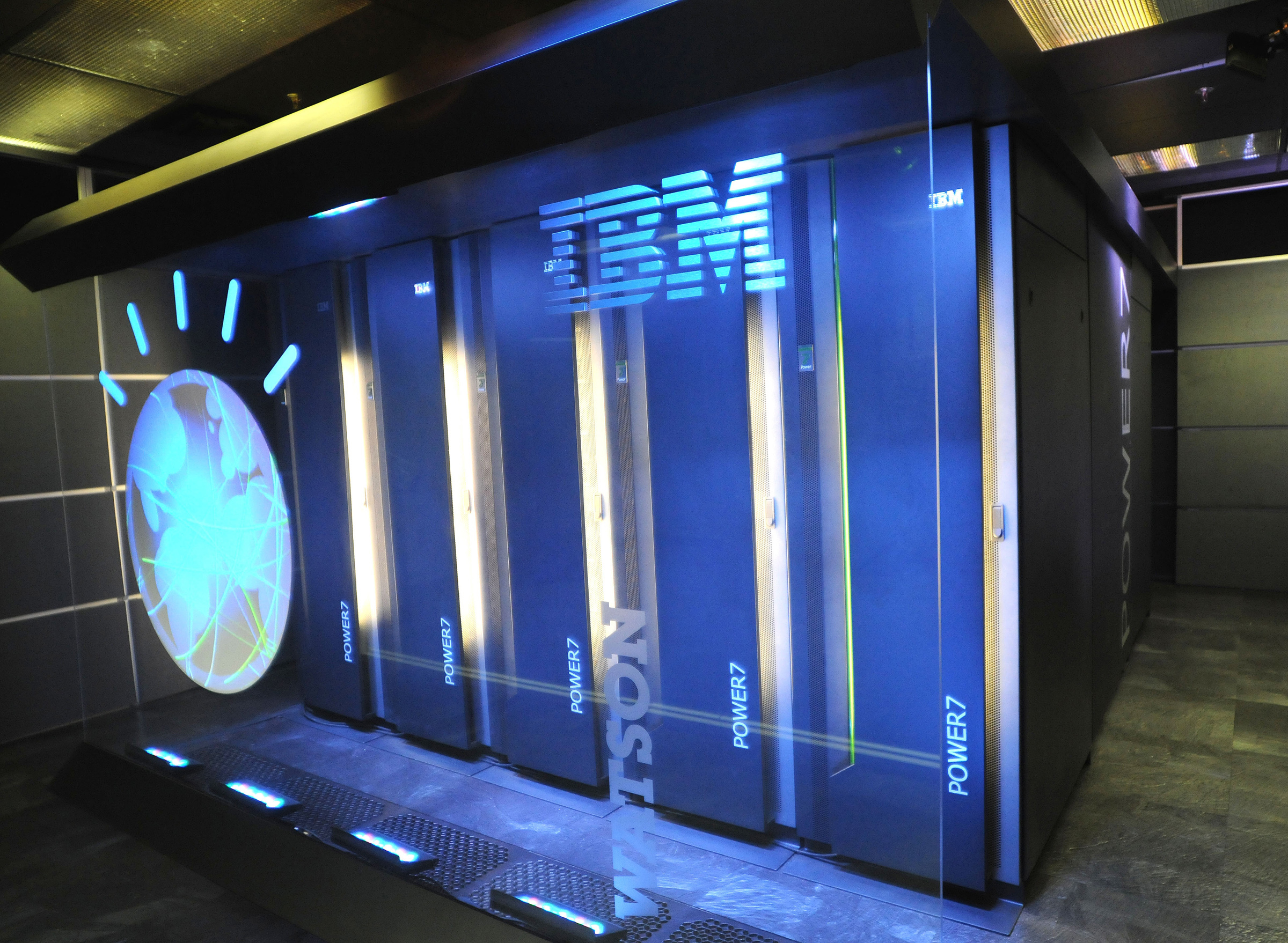
Jeopardy! contestants Ken Jennings and Brad Rutter got a spanking the likes of which they’ve never seen by Watson, an IBM supercomputer, last night.

How would Watson do against that other font of knowledge — Google? Watson is optimized to understand human language, which can be full of ambiguity, wordplay, sarcasm and puns. Google makes some accommodations for language, but keywords do the heavy lifting.

Google did both much better than I expected and about as well as I expected. It did much better in the sense that I expected Watson to runaway from Google as much as it ran away from Jennings and Rutter. It did as well as I expected in that before I entered each clue into Google, I predicted how well Google would do. For example, I knew the Beatles lyrics category would be a piece of cake for Google. Those predictions were generally correct.

Watson had the correct response for 79% of the clues. (This includes clues for which Watson didn’t buzz in.) Google had the correct response in the first position 56% of the time and in the first 10 positions 79% of the time.

Google and Watson tended to struggle on the same clues. Both had trouble on Final Frontiers, Alternate Meanings and The Art of the Steal categories.

The only clue that Watson got wrong and Google nailed was “The first modern crossword puzzle is published & Oreo cookies are introduced” in the category Name The Decade. Google’s answer was found on this page that provides explanations of the New York Times crossword. If Watson could have heard Jennings’ incorrect answer of “1920s,” his backup answer of “1910s” would have been correct.

Finding a document with the right answer is one thing. Synthesizing that information into an answer is another significant challenge. Google only partially does that. I scored Google based on the snippet returned. While it wasn’t generally able to provide the precision of Watson, it did provide the right parts of the document with the answer.

As for Final Jeopardy!, neither Watson or Google got it right.

The clue in U.S. Cities was “Its largest airport is named for a World War II hero; its second largest, for a World War II battle.” Watson hesitantly answered Toronto. Google’s best guess would’ve been Arizona. Even geographically challenged Americans would know that neither answer fit the parameters of the category. (I hope.)

Oddly, that’s a relatively easy clue for humans. Think of U.S. cities, narrow it to the big ones, narrow that to ones that have multiple airports and then go through the list. Kennedy… Dulles… LAX… SFO… Hobby… Love…

Mmmmm…. deep dish.

A few thoughts on search from this exercise:

  • Google still has serious problems with content duplication. One query generated seven pages of essentially the same AP story about Jeopardy!
  • Content farms got in the way of the best answer a few times.
  • Wikipedia frequently provided the correct answer.
  • The day that Google can synthesize answers to queries is closer than I thought. Bad news for publishers.

Also see Danny Sullivan’s great analysis of the underlying technologies and the differences between natural language processing and keyword search.

Jeopardy! Watson vs. Google, Game 1 analysis

Jeopardy! Watson vs. Google, Game 1 comparison. Each cell represents a question. Grid position maps to the position on the Jeopardy! game board; you can see the clues and responses at the Jeopardy! Archive. The colors indicate Watson's performance; the numbers and "X"s indicate Google's performance. Watson is only given credit for answers in its #1 position. If you give Watson credit for having the answer in any of its 3 positions, it would pick up 6 more questions.

Methodology:

  • I used a private browsing session to avoid any influence from my search history.
  • I ran the exact text of the clue (as provided on the Jeopardy! Archive) through Google.
  • I excluded all results that were specific to the Jeopardy! match.
  • I looked for the text of the answer on the search results page, including the result title and snippet.
  • If the correct response appeared in the title or snippet, Google got credit. For the Name the Decade category, I gave Google credit if a year appeared that was in the correct decade. That would not be a correct response for the game, but I felt it was a better comparison for these purposes.
  • Search results change based on time, new content published, geography and other factors. You may not be able to duplicate these results. The optimal tests would be done on Google’s index prior to the airing of these episodes.

Disclosure: I have several good friends who work at Google and went to high school with co-founder and CEO Larry Page.

Posted in google, search | 7 Comments

Why Apple is right on subscriptions

Apple has built an incredibly valuable distribution platform. It’s perfectly reasonable for them to say “if you make money using our platform, we want a piece of it.”

Distribution costs money. Facebook charges developers on its platform 30% for using Facebook Credits. It’s not uncommon for distributors to take significantly more than Apple is taking. I’ve done deals where the other company does all of the heavy lifting and my company received more than half the revenue for bringing in customers. Google pays AdSense distributors 68% of the revenue it earns off content network ads. And that’s for no-name distributors. That number can be much higher for branded players.

Groupon has local businesses (which have hard costs for each person served) discount their product or service 50%, then takes 50% of that and sticks the business with 3% for processing. Merchants net 22% of what they would normally charge.

Retail gross margins are generally much higher than 30%. Would anyone argue that Apple should sell Microsoft Office in Apple stores at cost?

A seamless experience can benefit all parties. As a consumer, a key appeal of the App Store is that it’s seamless. I recently purchased two wonderful coffee table books on Vincent Van Gogh and Monet. These were quick and easy purchases. But I’ve resisted buying other products because I’ve just never been motivated enough to fill out all of my information again.

Game publishers such as Rovio (of Angry Birds) fame have been paying 30% for a long time. Apple is essentially closing a loophole that allowed some publishers to free ride on its platform.

We are still very early in the tablet content race. As popular as the iPad is, only a small portion of the population has one. If publishers believe that their content is so valuable and object to Apple’s terms, they should shun the iPad and develop for platforms with lower distribution costs. Heck, a brand name publisher like The New York Times could offer a platform provider an exclusive partnership in exchange for lower fees or even upfront payments or marketing support.

If their content is really that valuable, fewer people will buy iPads and Apple will be forced to lower its distribution fee. That’s how the free market works.

The sad reality is that publishers don’t have that kind of market power. If they opt out of iPad, it’s more likely that they’ll lose. That’s not Apple’s fault.

Posted in apple, ipad, journalism, newspapers, publishing | 4 Comments

The Daily is a solid effort facing huge challenges

Feature story on prison inmates making toys in The Daily.

This feature story on prison inmates making toys in The Daily looked promising; it turned out to be only a short video.

Today we saw the unveiling of Rupert Murdoch’s new iPad-based newspaper, The Daily.

It looks very different from apps from the Washington Post, New York Times, Wall Street Journal and USA Today. The impression is distinctly more of a magazine than a newspaper. My first reaction was “It sure is purty.”

While other apps, like the Journal’s and the Post’s, have bizarre navigation modes, navigating The Daily feels very natural. (With the exception of occasional stutters, likely caused by the app’s heavy use of graphics and animation.) Tabs are readily available to flip among sections.

The first issue was clearly designed as a showcase with numerous interactive elements such as user polls, timelines and quizzes. Multimedia elements include extensive use of photos, videos and even a gratuitous 360-degree photo to illustrate a story about Venice sinking into the sea. (Not exactly breaking news there.) A Super Bowl feature included an animation that explains a shovel pass. It would’ve been more useful if it also included a video.

The content is of mixed quality, though much of it is has the quality and depth of Parade Magazine. (Much of it is wire copy.) A feature on inmates in Louisiana making toys for kids with a “only in The Daily” starburst looked promising. It turned out just to be a short video clip.

There are print design conventions that some magazines use, such as two-page spreads. While that can be somewhat excused in shovelware magazines exported from inDesign, it’s hard to justify for a publication specifically designed for a tablet.

Fashion news in The Daily

I will never be interested in fashion news. I don't need to see it.

The Daily integrates with social networks, but it is clumsy. A feature on Rihanna has her Tweet stream embedded. Tweeting a story defaults to the oh-so-catchy “Check out this article from The Daily” instead of something that might actually inspire a click. The Facebook equivalent contains some information about the article, but only after generic text and HTML that Facebook doesn’t render.

The Daily suffers from several significant issues:

  • The content is vapid. It’s as if someone took a look at USA Today and said, “Whoa! This is too intellectual.”
  • It contains a lot of crap I don’t want. I’m not interested in women’s fashion or celebrity gossip. On the other hand, there’s not enough tech or business news. I’m not convinced that in 2011 it makes sense to program for an abstract general audience that doesn’t exist. News consumption is increasingly driven by friends and colleagues. The New York Times or the Post, with their long histories, have a chance (albeit slim) of using their editorial voices. Creating one from scratch seems like a Herculean challenge.
  • It’s not timely. Although they claim that there will be more frequent updates for big events, the bulk of the content will be updated only once a day. In 2011, The Daily might as well be The Fortnightly.
  • There is no interaction with reporters. Yes, reporters get things wrong. Just this week, David Pogue had an error in one of his columns. I tweeted the error to him, he responded and it was fixed in a few hours. The Daily doesn’t provide email addresses or Twitter handles of its contributors. There are no bios. These are things that most newspapers got right several years ago.
  • There is no way to dig deep. A story about data consumption on cell phones caught my eye. But it was one paragraph. Clicking on it did nothing. Even 140-character Tweets often contain links. A movie review for Cold Weather made me interested enough to want to know when it was playing. Sorry, you can’t do that here.
  • You can’t search. I wanted to tweet a story about Quora that I’d read. But there wasn’t an easy way for me to find it. I had to flip through every page, just like I would in a real newspaper. That’s ridiculous.
  • Update: Exploding content. Can’t read the news today? Too bad, it goes away tomorrow. My hard work on yesterday’s crossword was wiped away when I launched the app this morning. With physical newspapers you can at least keep things around and until you want to get rid of them.
Football animation.

This animation explains a shovel pass.

Despite its flaws, the bottom line is that The Daily is the best incarnation of an online newspaper I’ve seen. The question is how big is that market?

Estimates are that Murdoch is spending $500,000 a week for The Daily, or an annual budget of $26 million. While that’s tiny compared to traditional publishers, it’s gargantuan compared with funding that tech startups receive. Then there’s the $30 million already spent to get to launch.

Based on the proposed subscription price of $40/year and subtracting Apple’s cut, the venture would need to have about 930,000 subscribers to break even. As a print publication, that would make it the third largest paper in the country, behind the Journal and USA Today. Even if you assume that The Daily could make as much per user on advertising as it does on subscriptions, that’s 465,000 subs to break even. (For comparison, this assumption would also mean that The Daily makes more per user on advertising than the most successful Internet advertising company — Google.)

Those are huge numbers and I’m very skeptical that The Daily can do it.

Disclosure: I worked for washingtonpost.com from 1998-1999.

See also: Why iPad magazines aren’t selling well

Posted in apple, ipad, journalism, media, newspapers | 1 Comment