Bringing email into the 21st century

John McKinley, former AOL CTO and now VC, asks “Who will be the first major (Google/Yahoo/Microsoft/AOL) to break ranks and apply a fundamentally new metaphor to email?” There’s been a proliferation in ways to communicate — IM, Facebook, Twitter, blogs, Wikis, SMS, comments.

People have more compelling, more contextual, more effective, and more convenient options to share and interact than ever before, and incumbent forms of communications will be the losers here.

Email as we know it has changed little since the mid-90s. Most of the features have been incremental. The biggest breakthrough was Webmail instead of client-based mail — and that happened in 1996.

John has some great thoughts. Here are my additions, in priority order:

Spam control – One of the reasons I like Facebook messaging is that I know that messages are much more likely to be real — no Viagra or stock pitches. I’d say more than 70% of the mail I get in my Gmail account is spam. I also have had numerous cases of false positives with important personal mail getting sent to the spam folders. As a domain owner, I also get to deal with the bounces from spammers forging my domain name. We need to move to a model where we focus on identifying the good email. (See my blog post on Picture ID for one example.) If the big four would work together to secure email sent among them, it’d be a big step forward.

Security – This strikes me as a business opportunity for the big 4. It amazes me that this far into email, it is less secure than paper mail. I’d love to sign up for e-billing with all my credit card companies and utilities, but it’s a pain. The lack of email security requires that I get an email reminder (hope that the email doesn’t get spam filtered), log into their site and then view a PDF. I just want them to send me a copy of my bill that I can view, store and search. You could probably charge for this – 1 or 2 cents per bill is a lot cheaper than the post office. You could also provide the ancillary service (which is becoming even more important) of authenticating the emails to prevent phishing.

Smarts – I wrote a blog post about smart email a while back. Many of the emails I get are from computers – banks, credit card companies, airlines, etc. They’re all generated off templates. Understand them and do the right thing. Put my bill due notices on the calendar, along with my itineraries. Show me when that package from Amazon is going to arrive. Automatically archive all the sales and deals that have expired. I don’t think entity extraction is good enough for this. Google has been trying for a while with Gmail and the results have been fairly poor. It will likely require the mailers to follow microformats and append the data in machine readable form. But if the Big 4 were to agree on a framework for the formats, it would take off. You could start with vCal and work from there.

Recommended reading:

Posted in aol, email, facebook, google, microsoft, social networking, yahoo | Comments Off on Bringing email into the 21st century

Barack Obama seeks answers on LinkedIn

Barack Obama asks LinkedInBarack Obama has joined LinkedIn, asking the LinkedIn community about what the next president can do to help small business. Back in January, Hillary Clinton asked Yahoo! Answers users about ways to improve health care.
Obama’s LinkedIn profile outlines his career as U.S. Senator, lecturer and Illinois state senator.

Rudy Giuliani is also on LinkedIn. Giuliani even has two endorsements, praising his work as mayor of New York City with his top qualities listed as “Great Results, Personable, High Integrity” and “Great Results, Expert, High Integrity.” Caroline Giuliani doesn’t seem to be on LinkedIn, potentially saving her father some embarrassment.

Both candidates have chosen to hide their connections, just in case the likes of Bernie Kerik resurface.

Posted in advertising, elections, social networking | Comments Off on Barack Obama seeks answers on LinkedIn

#1 rule of economics: customers don’t want to feel like chumps

If you’re like me, you’ve read way too much about Apple’s $200 price drop on the iPhone. But there’s one more worth reading. Economist Steven Levitt (author of Freakonmics) asks “Should Apple Burn Its Economics Textbooks?” Apple’s
$599 initial price and subsequent price cut was very much in line with economic theory.

But it ignored the fact that customers don’t want to feel like chumps. We typically hate the companies that use elaborate pricing models: airlines, hotels, car dealers. We hate airlines that charge us $300 for a flight when the person next to us paid $150. (That anger isn’t entirely alleviated when on the next flight the situation is reversed.) We hate to pay $300 for a hotel room when we know that someone got a similar room in the same hotel on Priceline for $75. It may be the best economics, but it doesn’t feel right.

My personal favorite is Ticketmaster’s TicketFast fee. For an extra $2.50, you can print out your tickets at home. Or you can pickup tickets at will call for free. I’m saving the venue money by not having to serve me at will call and I’m shortening the line for others. They want me to pay them extra for it? They should be giving me a discount.

Then I do my own economic analysis and determine that it’s worth $2.50 to me not to have to stand in line.

Posted in apple, marketing | Comments Off on #1 rule of economics: customers don’t want to feel like chumps

Chili’s directors don’t want their baby back ribs

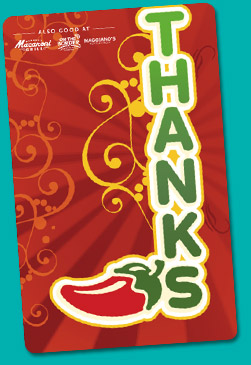
Chilis gift cardIt’s not unusual for corporate board members to get perks. Board members of Brinker International, which franchises Chili’s, Macaroni Grill, On the Border and Maggiano’s can eat for free at the company’s restaurants using a complimentary dining card.

For some, their answer is thanks, but no thanks.

Three of the nine board members, including now defense secretary Robert Gates, didn’t use their cards at all. In Brinker’s proxy filing, they disclose the tax liability paid by Brinker for each director. The hungriest director incurred the company a $1,012 gross up. (Equating to roughly $3,000 worth of dining.)

via Footnoted.org

Posted in fun, random | Comments Off on Chili’s directors don’t want their baby back ribs

I’m a criminal, but you can’t prove I made a profit

Can you be convicted of money laundering if the government can’t prove you made a profit? That’s the question the Supreme Court faces in United States v. Santos (pdf) when it comes into session in October.

Efrain Santos was convicted of running an illegal gambling operation and money laundering. He was sentenced to 60 months in prison on the gambling charges and 210 months for money laundering.

The money laundering charges stem from Santos’ use of the money from the gambling operations to pay the people who helped run it, including Benedicto Diaz (who is also a party to the case).

The central question in the case is what the word “proceeds” means. Is it the gross revenue (all the money taken in by the gambling operation) or the net income (all the money taken in minus expenses)? The district court decided that given the statute’s ambiguity, it should be interpreted as net income and vacated the money laundering convictions.

Proving profits could be challenging for prosecutors. From the decision of the appeals court of the Seventh Circuit (pdf), which upheld the district court decision:

The government contends that serious evidentiary problems result from interpreting proceeds to mean net income. Sure enough, criminals do not always keep ready records of their dealings, and, when they do, the line between the payment of expenses and reinvestment of net income is, generally speaking, murky, especially given the likely absence of accounting standards.

If the Supreme Court upholds the Seventh Circuit decision, maybe some of the accountants from Arthur Andersen can help develop the accounting standards for crooks.

Posted in fun, random | Comments Off on I’m a criminal, but you can’t prove I made a profit

Comparing Google News to other news outlets (screencast)

There’s been a lot of discussion about Google’s move to host wire service content on Google News instead of linking off to other Web sites. Much of the discussion has focused on decreased traffic to newspaper Web sites from Google News. There’s a bigger threat to online newspapers: Google News presents the content in a much better user experience.

While newspaper Web sites are full of obstacles such as popup ads and registration requirements, Google News is clean and load fasts. The screencast below compares the same news story on three media sites and Google News. A higher resolution screencast is also available (Java required). If you’ve read my previous story, skip ahead until the counter below shows 6:52.

The Google News story experience is simply better. And it’s just the beginning. I expect we’ll soon see Google’s comments from newsmakers rolled into this experience.

Thanks to Sree for the pointer to Screencast-O-Matic.

More on: Google, journalism, newspapers

Posted in google, journalism, media, newspapers | Comments Off on Comparing Google News to other news outlets (screencast)

CNN launches in HD

CNN is now transmitting an HD feed, making it the first American news network to broadcast in HD. Most people won’t be able to see it just yet because the cable companies aren’t carrying the HD feed.

CNN’s shows from New York, which include American Morning and Anderson Cooper 360 will be available in HD; shows from Atlanta and Washington will be shot in SD and upconverted. Wolf Blitzer fans will need to wait until the Washington studios are upgraded to see Blitzer in HD glory.

Most field video — e.g., the news — will still be in SD. Select documentaries will be produced in HD.

Given that CNN’s air is filled with politicians, how important is this? I’m not sure. As I type this, I see Senator Richard Shelby on screen. I don’t really need to see him in HD. There are definitely some stories that will benefit from HD, but it’ll be a while before the field reports are in HD. In the mean time, we can study every imperfection on the anchors’ faces.

This morning CNN has been using a gratuitous shot from Myrtle Beach, S.C., to show off the HD capability. Too bad we can’t see it.

Recommended reading:

Posted in television | Comments Off on CNN launches in HD

Google News starts hosting wire service content

In more bad news for the newspaper industry, Google is now starting to host its own versions of content from the Associated Press, Agence France-Press and UK and Canadian wire services.

Here’s a screen shot of an AFP story:

AFP story hosted by Google News

Yahoo! and AOL have been doing this for years. Here’s the same story on Yahoo!

Google had been linking off to versions of wire service stories published by other media outlets, driving traffic to those sites.

For readers, this is a good thing. In most cases, news outlets have subtracted value from wire stores: making their own edits (sometimes introducing errors), cluttering stories with lots of irrelevant ads, splitting stories across multiple pages. The versions of wire stories on newspaper sites are sometimes shorter because they were cut to fit the space available in the paper. Readers also have had to deal with various UIs depending on what site they get sent to.

Now readers get complete stories in a consistent format. In typical Google form, the layout is simple. You get the story, any related pictures and links to related stories. The entire contents of the article are one page. Compare the same story about Mexican truck programs on Google News, My San Antonio, ABCNews.com, the Houston Chronicle and the Denver Post. The Google News page is by far the cleanest and loads the fastest.

The move to host wire content is married with better duplicate detection. This dramatically reduces the House of Mirrors effect. Readers won’t see the same wire story 300 times in the results. This makes it easier for readers to find other voices on a topic.

I haven’t seen advertising on these pages yet, but now that Google seems to be licensing the content, it seems inevitable.

More on: Google, journalism, newspapers

Further reading:

Posted in google, journalism, media, newspapers, search | 2 Comments

Christmas in August at Costco

Christmas decorations on sale at Costco before Labor Day

It’s not even Labor Day and my local Costco already has Christmas merchandise out, complete with “Santa Claus is Coming to Town” playing nearby.

Only 116 shopping days left!

Posted in fun, random | Comments Off on Christmas in August at Costco

Jayson Blair, Judith Miller and the New York Times archive

Yesterday, I wrote about how The New York Times is having to look at handling corrections in an era where their archives are becoming increasing accessible to search engines. I decided to take a closer look at how the Times has handled two of the more egregious episodes in its recent history — the Jayson Blair scandal and the missteps in their coverage in the lead up to the Iraq War.

Blair was a young reporter who gave the Times a serious black eye, being forced to resign amid charges of plagiarism and making up facts in stories. The Times ended up running numerous corrections on his stories.

Take a look at this article about Silicon Valley investors, which is the first result that comes up for the term “Benjamin I. Goldhagen” in Google.

About half way down the story, you’ll see this quote:

”The way races work,” Mr. Goldhagen said, ”is that sometime along the way it’s going to be painful. But you just have to say that ‘it’s O.K., it’s painful, but you got to keep going to finish the race.’ But this is nearly impossible.”

If you just read this page, you’d miss the correction that was later applied:

In this article about the struggles of Internet entrepreneurs in obtaining funds,Mr. Blair quoted Benjamin I. Goldhagen, founder and former chief executive of Redtop, as saying, ‘The way races work, is that sometime along the way it’s going to be painful. But you just have to say that it’s O.K., it’s painful, but you got to keep going to finish the race.’ But this is nearly impossible.’ Mr. Goldhagen said that he did not say ‘But this is nearly impossible.’

That correction shows up on the second page of the story, along with an editor’s note talking about Blair’s plagiarism and fabrications. Given the seriousness of Blair’s violations, every page of every story he wrote should have that disclaimer.

The Times has expressed regret for its mishandling of its early coverage of the Iraq War, including work by former star reporter Judith Miller. In an editor’s note on May 26, 2004, the Times said:

[W]e have found a number of instances of coverage that was not as rigorous as it should have been. In some cases, information that was controversial then, and seems questionable now, was insufficiently qualified or allowed to stand unchallenged. Looking back, we wish we had been more aggressive in re-examining the claims as new evidence emerged — or failed to emerge.

The editor’s note uses as an example a specific article by Miller:

On Dec. 20, 2001, another front-page article began, “An Iraqi defector who described himself as a civil engineer said he personally worked on renovations of secret facilities for biological, chemical and nuclear weapons in underground wells, private villas and under the Saddam Hussein Hospital in Baghdad as recently as a year ago.” Knight Ridder Newspapers reported last week that American officials took that defector — his name is Adnan Ihsan Saeed al-Haideri — to Iraq earlier this year to point out the sites where he claimed to have worked, and that the officials failed to find evidence of their use for weapons programs. It is still possible that chemical or biological weapons will be unearthed in Iraq, but in this case it looks as if we, along with the administration, were taken in. And until now we have not reported that to our readers.

The article itself doesn’t have any mention of a correction. Neither does this article about aluminum tubes. Nor does this article about a scientist who claimed that chemical and biological weapons were destroyed days before the war began. All of these examples are pulled straight from the editor’s note, so the Times clearly knows about them.

The core premise of each story is in serious doubt, but you’d never know about it from the article.

Posted in journalism, media, newspapers | Comments Off on Jayson Blair, Judith Miller and the New York Times archive
